Even well-maintained pools can develop problems from time to time. The good news is that most common pool issues have straightforward solutions when caught early. Understanding what causes these problems — and how to fix them quickly — saves you time, money, and frustration. Here are the five most common pool problems and expert-approved solutions.
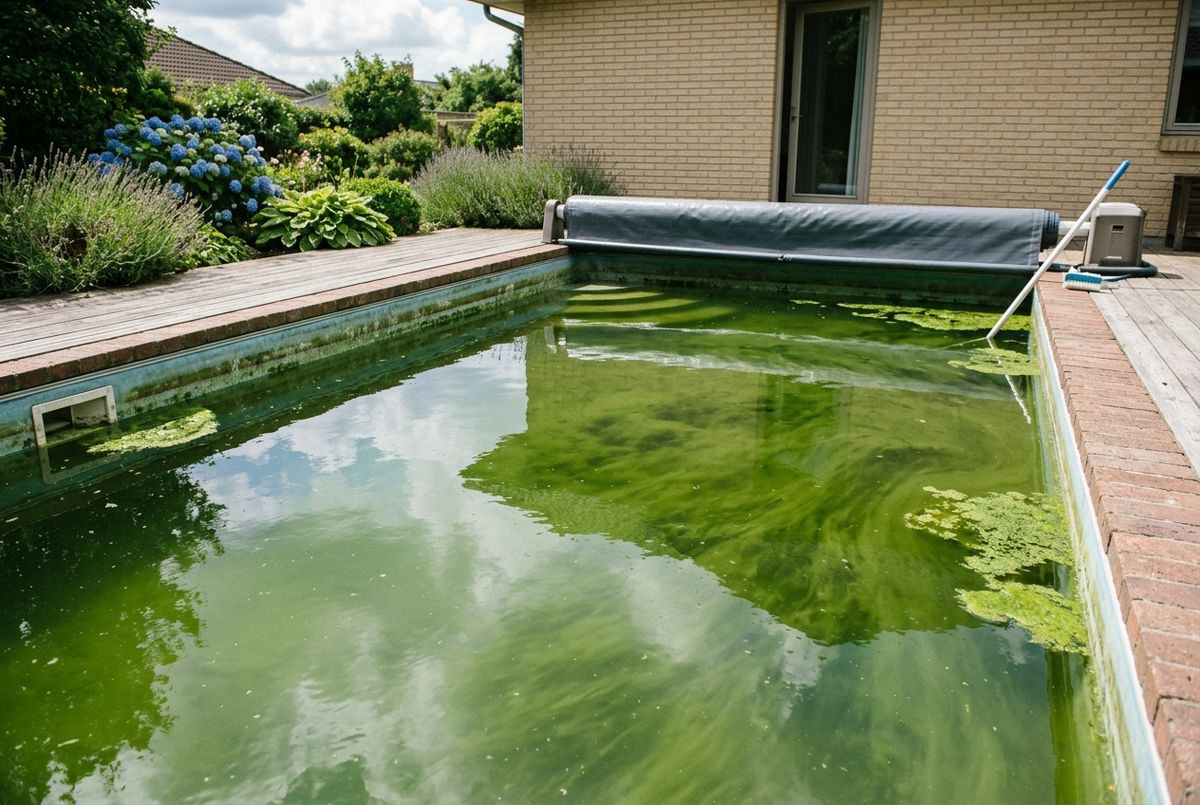
1. Green or Algae-Filled Water: This is the pool problem that strikes fear into every owner's heart. Green water is caused by algae bloom, which thrives when chlorine levels drop too low, pH drifts out of range, or circulation is inadequate. To fix it, first brush all pool surfaces to break up algae colonies. Then shock the pool with 3–4 times the normal dose of chlorine (calcium hypochlorite works best for this). Run the filter 24/7 until the water clears, backwashing or cleaning the filter as needed. Add an algaecide as a follow-up treatment. Prevention is key: maintain consistent chlorine levels and run your pump long enough each day.
2. Cloudy or Milky Water: Cloudy water can result from several factors: poor filtration, unbalanced chemistry, or high levels of dissolved solids. Start by testing and balancing your water — high pH and low chlorine are the most common culprits. Check your filter pressure and clean or backwash as needed. If chemistry is balanced and the filter is clean, try adding a water clarifier, which causes tiny particles to clump together so the filter can catch them. In severe cases, a flocculant treatment followed by vacuuming to waste can clear the water quickly.
3. Staining on Pool Surfaces: Brown, green, or blue stains on pool walls and floors are typically caused by metals in the water — iron (brown/rust), copper (blue/green), or manganese (purple/black). These metals can come from well water, corroded equipment, or cheap algaecides. Use a metal sequestrant to bind the metals and prevent staining. For existing stains, ascorbic acid (vitamin C) works remarkably well on metal stains — rub a tablet directly on the stain to test. Avoid using well water to fill your pool without pre-treating it with a metal remover.
4. Burning Eyes and Skin Irritation: Contrary to popular belief, this is almost never caused by "too much chlorine." It's actually caused by chloramines — combined chlorine that forms when free chlorine reacts with sweat, oils, and urine. The solution is to shock the pool to break apart chloramines and restore free chlorine levels. Also check your pH — water outside the 7.2–7.6 range is a common cause of eye and skin irritation regardless of chlorine levels.
5. Pump Losing Prime or Low Flow: If your pump struggles to maintain prime (the basket isn't full of water) or flow seems weak, check for obstructions first. Clean out the skimmer basket, pump basket, and impeller. Inspect the pump lid O-ring for cracks and lubricate it. Check for air leaks on the suction side — common spots include the pump lid, drain plugs, and pipe unions. If the pump is more than 8–10 years old and frequently losing prime, it may be time for a replacement. DR Installs can diagnose and resolve any pool equipment issues — give us a call if these DIY fixes don't solve the problem.
Need help with your pool?
Schedule a service with DR Installs today! Our experienced team handles everything from pool openings and closings to equipment repairs and full installations.
Schedule Service (815) 483-9713